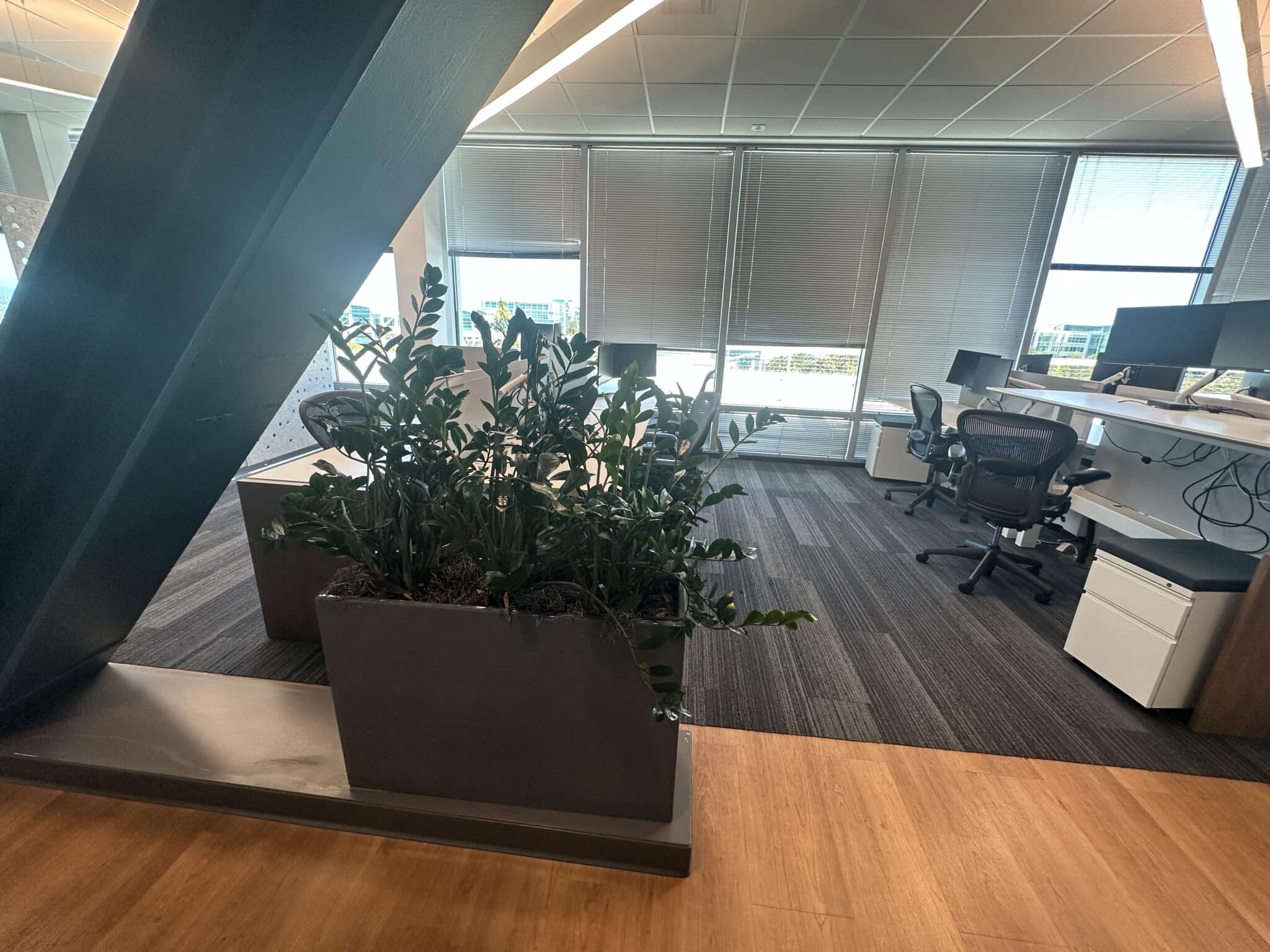
Biophilia: people are born with an innate tendency to seek connections with nature.
Co-working spaces and startup offices are built on energy, collaboration, and adaptability. Their interiors often reflect innovation through open layouts, flexible seating, and dynamic branding. In these environments, custom plant design is more than decoration. It shapes atmosphere, supports wellbeing, and reinforces identity.
From a professional horticultural standpoint, designing plant installations for shared workspaces requires strategic planning. Lighting conditions vary throughout the day, foot traffic is constant, and layouts evolve quickly. A successful plant design must remain resilient while enhancing productivity and creativity.
Unlike traditional offices, co-working spaces accommodate multiple businesses and shifting configurations. Plants must complement a layout that may change as teams grow or relocate within the space.
Key considerations in custom plant design for these environments include:
Plant placement should enhance, not obstruct, collaboration. Large statement plants can define lounge areas, while smaller installations soften workstation clusters. Strategic positioning improves acoustics, reduces visual clutter, and creates subtle boundaries without physical barriers.
Designing for longevity is equally important. Startups often experience rapid growth. A custom plant design plan must anticipate expansion while maintaining aesthetic consistency.
Plant selection forms the backbone of any successful installation. Co-working spaces often include a mix of bright windows, shaded corners, and artificial lighting. Each zone demands species suited to its microclimate.
Professional designers evaluate:
Low-maintenance tropical plants are frequently chosen for indoor workspaces due to their resilience. However, even hardy species require consistent care. Without proper watering schedules and nutrient management, plants may decline quickly.
Indoor greenery can also attract minor pests if not maintained carefully. Fungus gnats, spider mites, aphids, and mealybugs are common concerns in commercial plant installations. Proactive plant health monitoring helps prevent these issues from spreading within shared spaces.
Custom plant design incorporates preventative care from the outset. Monitoring protocols, soil management, and integrated plant health strategies support long-term success.
Many co-working spaces and startups include patios, rooftop terraces, or courtyard areas. These outdoor zones offer additional opportunities to expand custom plant design beyond interior walls.
Outdoor plant strategies often involve:
Outdoor greenery enhances employee wellbeing and provides alternative meeting spaces. However, exposure to fluctuating weather conditions demands careful plant selection and installation techniques.
This guide on outdoor plant potential explores strategies that help commercial properties maximize exterior greenery while preserving plant health.
Professional oversight ensures that outdoor installations complement interior aesthetics while remaining practical and sustainable.
The most visually striking plant installations can deteriorate quickly without structured maintenance. In high traffic co-working spaces, consistent care is essential.
Maintenance considerations include:
Because shared workspaces operate continuously, maintenance must be efficient and minimally disruptive. Professional teams coordinate visits around peak occupancy times and document plant health trends.
Attempting to manage large-scale plant installations internally often leads to inconsistent results. This article on professional plant care outlines why structured horticultural support outperforms informal upkeep in commercial settings.
Integrated maintenance programs also help prevent pest outbreaks. By monitoring soil moisture and leaf condition, technicians can address early signs of fungus gnats, spider mites, aphids, or mealybugs before they impact the wider installation.
For startups, office aesthetics are part of brand storytelling. Custom plant design reinforces values such as sustainability, innovation, and employee well-being. Plants soften industrial architecture, introduce natural textures, and create inviting communal zones.
Design strategies that support brand identity include:
Greenery contributes to both employee morale and client perception. Thoughtfully designed installations signal attention to detail and long-term investment in the workspace.
However, visual impact should never overshadow practicality. Lighting conditions, airflow, and maintenance access must remain priorities. Custom plant design succeeds when creativity aligns with horticultural science.
From our professional perspective, the most effective installations combine aesthetic ambition with operational foresight. Strategic planning reduces maintenance challenges and supports healthy, thriving plants that evolve alongside growing businesses.
Custom plant design transforms co-working spaces and startups into inspiring, adaptable environments. To create a professionally designed and maintained green workspace, contact The Wright Gardner and bring lasting vitality to your office.
As winter fades, outdoor spaces begin to shift in subtle but important ways. Soil warms…
Office greenery has become an essential part of modern workspaces. Plants bring visual balance, improve…
Spring is a natural starting point for refreshing outdoor spaces. As temperatures rise and growth…
Balconies often serve as valuable extensions of living spaces, especially for tenants in apartments or…
Indoor plants add life, color, and balance to interior environments. Whether placed in homes, offices,…
Modern offices often prioritize open layouts that encourage collaboration and flexibility. While these spaces support…