
Winter rain in the Bay Area presents a unique challenge for outdoor planters. Unlike regions with freezing temperatures, local winters bring prolonged moisture, saturated soil, and inconsistent sunlight. Without proper preparation, planters can quickly become waterlogged, stressed, or visually unappealing. From an expert perspective, winter readiness is about managing excess water while preserving plant vitality and design intent.
Outdoor planters often support office plants that contribute to curb appeal, employee experience, and overall property presentation. When winter rain is not accounted for, these installations can decline rapidly. Preparing planters in advance allows plants to withstand seasonal conditions while maintaining a clean, professional appearance throughout the rainy months.
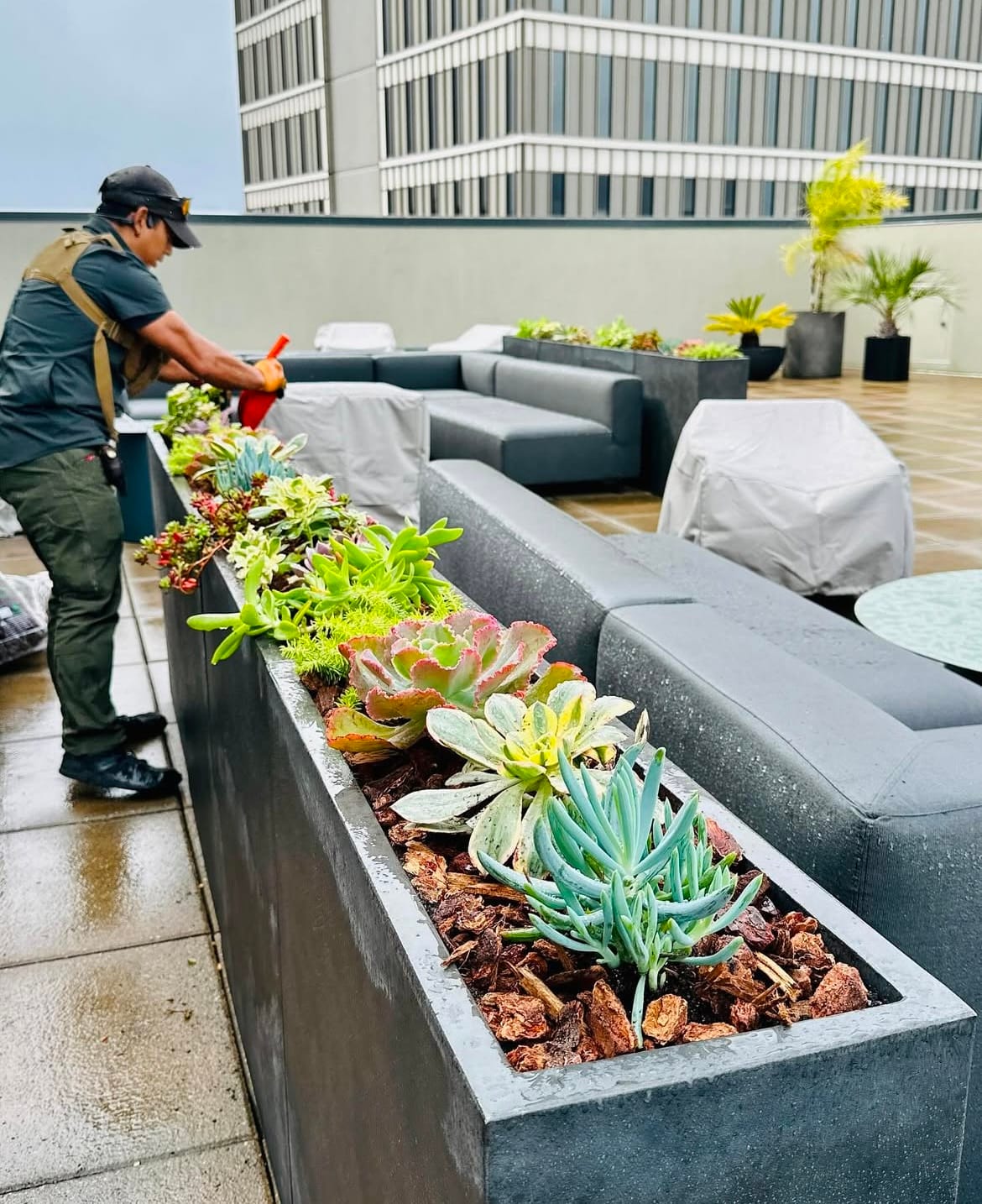
How Bay Area winter rain affects outdoor planters
Bay Area winters are defined by steady rainfall rather than extreme cold. This creates prolonged soil saturation that affects roots, drainage layers, and planter materials. Many issues develop gradually and may not be noticeable until plant health declines.
Common impacts of winter rain include:
- Root suffocation caused by standing water
- Soil compaction that limits oxygen flow
- Increased fungal and moisture-related stress
- Nutrient loss due to excessive leaching
For outdoor planters supporting office plants, these issues can undermine months or years of growth. Plants that appear stable in dry seasons may struggle once rain becomes consistent. This is why winter preparation must address moisture exposure before damage occurs.
Evaluating drainage before the rainy season begins
Drainage is the most critical factor in winter planter preparation. Even healthy plants will fail if excess water has nowhere to go. Professional evaluations focus on whether existing planters can handle prolonged rainfall without retaining moisture.
Key drainage considerations include:
- Presence and condition of drainage holes
- Internal layering beneath the soil
- Planter placement relative to slopes or overhangs
- Evidence of past water pooling or staining
Drainage problems often remain hidden because planters may drain adequately during light irrigation but fail under sustained rain. Addressing these vulnerabilities early reduces plant loss and limits maintenance disruptions later in the season. This proactive approach aligns closely with the value of professional plant care in maintaining healthy, long-lasting installations.
Adjusting soil and plant composition for wet conditions
Soil and plant selection play a major role in how planters respond to winter rain. Soil blends designed for summer growth may retain too much moisture during extended wet periods, especially in enclosed containers.
Professionals evaluate:
- Soil density and drainage performance
- Organic content and aeration capacity
- Plant tolerance to prolonged moisture
- Root structure relative to container depth
In some cases, soil blends are modified to improve airflow and drainage. Plant groupings may also be refined to favor species that perform better in wet winter conditions. These adjustments support plant health while maintaining the intended design aesthetic.
Protecting planter placement and surrounding surfaces
Planter placement influences how water interacts with both plants and surrounding hardscapes. Winter rain can cause splash-back, pooling, or runoff that affects planter stability and nearby surfaces.
Protective planning often includes:
- Elevating planters to promote runoff
- Relocating planters away from downspouts
- Preventing standing water at planter bases
- Reducing overflow near walkways and entrances
These steps help protect both plants and property surfaces from staining or slip hazards. Strategic placement also supports broader goals related to enhancing outdoor spaces. Reviewing ways to boost outdoor plant potential highlights why winter preparation should complement long-term landscape planning.
Ongoing care throughout the winter season
Preparation alone is not enough to protect outdoor planters during the Bay Area’s rainy months. Rain patterns can shift quickly, with periods of heavy saturation followed by brief dry intervals. Ongoing care ensures that planters respond well to these fluctuations rather than remaining locked in conditions that stress roots or compromise soil structure.
Winter care typically includes:
- Monitoring soil moisture levels
- Adjusting watering schedules based on rainfall
- Inspecting plants for disease or decline
- Maintaining visual balance as growth slows
Regular monitoring allows early detection of problems such as root stress, fungal growth, or soil compaction. Addressing these issues promptly helps prevent long-term damage that may not become visible until spring. Professional oversight also ensures that drainage systems continue functioning as intended and that planters are not quietly accumulating excess moisture after repeated storms.
Another important aspect of winter care is visual management. Growth slows during colder, darker months, which can lead to uneven shapes or sparse areas within planters. Light pruning, repositioning, and selective replacement keep planters looking intentional rather than neglected. This attention to detail preserves curb appeal and ensures outdoor planters continue supporting a polished, professional exterior even during extended periods of rain.
Keep your outdoor planters thriving through winter rain
Bay Area winter rain does not have to compromise the health or appearance of outdoor planters. With proper preparation and attentive care, office plants can remain vibrant and resilient all season long. For expert guidance and dependable service, contact The Wright Gardner to protect your outdoor planters through the rainy months.